
Electrolytes: when to use them and which format to choose
- equestrian-guides
By Kate Hore, RNutr (Animal), BETA ENFAR Nutr, R.Anim.Technol (Cert), Head Nutritionist, NAF
For retailers, electrolyte advice becomes especially important as warmer weather, increased travel and competition schedules increase the likelihood of horses sweating. Clear guidance at point of purchase can help customers understand why electrolytes matter, when sweat losses need to be replaced, and which NAF product best suits their horse’s routine.
Why do horses need electrolytes?
Horses regulate temperature by sweating, and significant levels of water and the body’s essential salts, or electrolytes, can be lost. It is really important that both are replaced to avoid poor performance and dehydration.
Electrolytes are body salts, or ions, responsible for many functions within the body. The most important to the horse are sodium, potassium and chloride, with magnesium and calcium playing smaller roles. How much a horse sweats will be influenced by factors including temperature, humidity and exercise intensity.
When should electrolytes be used?
Most horse owners are familiar with the signs of a hard-working sweating horse – the white lather that typically occurs under the tack, around the neck, chest and between the legs. However, horses dissipate sweat very efficiently, so dependent on work level and humidity your horse may be losing sweat without that being obvious.
Try this simple check. After work, is their saddle-cloth damp? If yes, that’s a good sign that electrolytes should be supplemented.
As a guide, sweat losses should be replaced whenever the horse has sweated, particularly when working above very light exercise. This includes when:
- Horses and ponies exercise or travel
- Heavy sweating has occurred
- During periods of hot weather
- They are in hard work
- They are in intense training programmes
Why is water essential?
As well as the electrolytes themselves, sweat losses include significant amounts of water. It is imperative that water is replaced alongside electrolytes, as failure to do so can negatively impact uptake of both water and electrolytes across the gut wall.
Just because you feed electrolytes, does not mean they get into the horse.
A wet, fibrous feed is ideal, as the fibre also helps support the gut’s role as a fluid reservoir for hydration. Either way, ensure clean, fresh water is always available.
Which electrolyte format should be used?
Different formats support different needs. A salt lick supports free access self-supplementation, while electrolyte supplements are used when sweat losses need to be replaced after work, travel or hot weather.
-
NAF Himalayan Salt Lick provides a pure form of salt for free access self-supplementation. However, self-supplementing is only really relevant for maintenance. There is no evidence they will increase that intake with work.
-
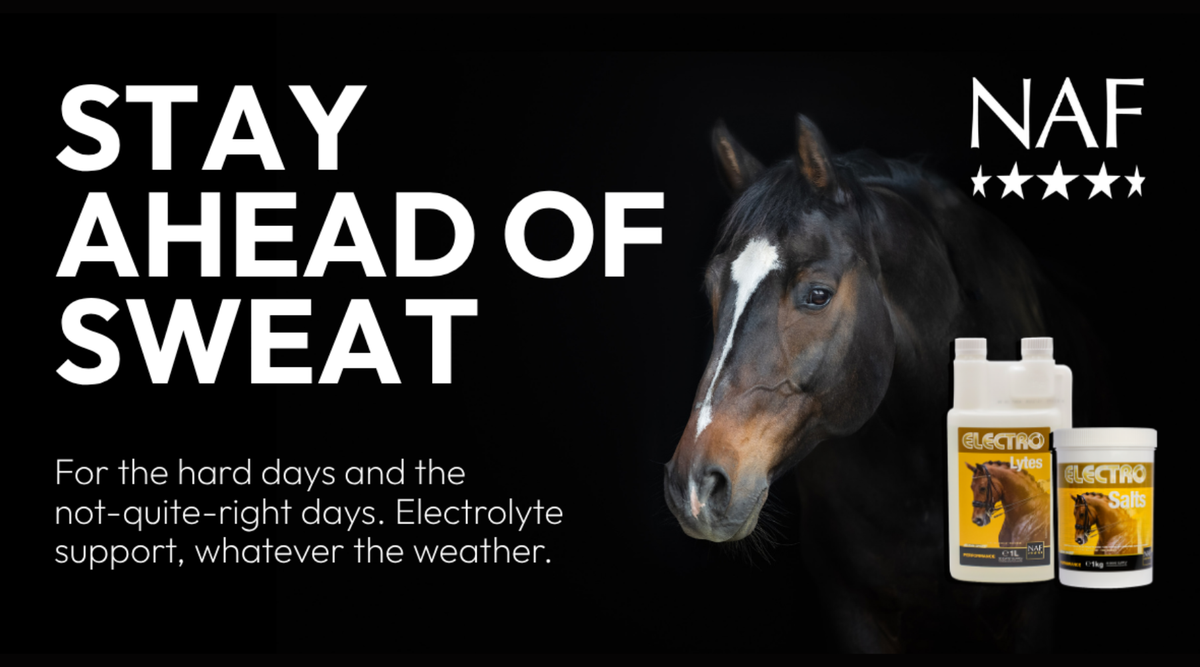
NAF Electro Salts is a concentrated formula designed to replenish vital electrolytes. Use when heavy sweating has occurred, during periods of hot weather, during hard work or intense training programmes.
-
NAF Electro Lytes is a convenient liquid solution designed to replenish vital electrolytes and is an alternative to Electro Salts for the fussy feeder. Use when heavy sweating has occurred, during periods of hot weather, during hard work or intense training programmes.
How should NAF electrolyte products be offered?
-
NAF Himalayan Salt Lick: hang at a safe height within easy reach.
-
NAF Electro Salts: add to feed or drinking water.
-
NAF Electro Lytes: add to water, ideally tepid, or in wet feed.
Remember, whichever format is used, ensure clean, fresh water is available at all times.